Tuesday, April 19, 2016

Healthy Meal Planner: How Much Does My Kid Need to Eat?

How Much Does My Kid Need to Eat?

Use this age-by-age guide to find out the amount of food your child should be eating -- and how to create healthy habits for a lifetime.

From Day 1, we worry about our kids getting enough to eat -- yet with the childhood obesity rate at 17 percent, we also fret that they'll get too much. What's the right amount? To cut through the confusion, nutrition experts help ed compile this guide of just how much kids need at each age, plus tips on how to stay on track. Follow their advice -- and your child's weight will be one concern you can cross off your list.
How to Eat Healthy: Raising Nutrition-Smart Kids

How to Eat Healthy: Raising Nutrition-Smart Kids

AGES 1-3 Feeling Finicky

Daily Calorie Needs 1,200 - 1,400
Remember that baby of yours who happily ate chicken, squash, and most anything else that landed on his high-chair tray? He's been replaced -- by someone a lot less agreeable at mealtime. After your baby's first year, growth slows down by about 30 percent, and so may appetite. Infants need to eat about 35 to 50 calories per pound, while toddlers require roughly 35 to 40 calories per pound, according to guidelines from the Institute of Medicine. How do you know if you're hitting that target?


TRUNCK ARCHIVE 

  • Trust toddler instincts. It's natural for a 2-year-old's appetite to be erratic from day to day. Yet according to a study by researchers at the University of California, San Francisco, up to 85 percent of parents say they push their kids to eat more, giving them rewards and praise for having a couple more bites. Believe your child when she pushes her plate away or tells you she's full. Otherwise, she'll eventually start to eat when she's not hungry -- and that's a slippery slope. A recent study from the University of Pennsylvania found that many overweight and obese 5- to 12-year-olds have lost touch with their own hunger cues. "Keeping a child aware of her hunger and fullness may go a long way to help prevent obesity," says study author Tanja Kral, Ph.D. are just too busy to eat -- after a few bites, they're hopping down from the table to play. It's okay to have healthy munchies (such as bite-size veggies, fruit, cheese, and whole-grain crackers) within arm's reach during playtime, but serve most meals and snacks at the table so eating there becomes a habit, says Dina Rose, Ph.D., a sociologist in Hoboken, New Jersey, who specializes in children's eating habits.
  • Stick to a schedule. Serve meals and snacks about three hours apart. "This helps keep your child at a healthy weight by 'normalizing' hunger," says Jill Castle, R.D., author of Fearless Feeding: How to Raise Healthy Eaters From High Chair to High School. A child who's always nibbling will never feel hungry. Plus, if your child skimps at one meal, you'll both know there's another opportunity to eat in a few hours.
  • Avoid food bribes. Yes, you'll get the short-term gain of a few bites of peas or chicken, but you're telling your child to eat more than she wants -- which can set her up for a pattern of overeating. You're also sending the wrong message about food. "If kids think that vegetables are just the yucky stuff you have to eat to get to the good stuff, they'll never learn to really like them," says Rose.
  • Get insights on toddler development and behavior with our interactive tool. Start now.

AGES 1-3 Sample Menu

Serve meals with 1/2 cup of low-fat milk; switch to water if your child is still thirsty. Have water or 100% fruit or vegetable juice at snack time. Don't exceed 6 ounces of juice daily.
breakfast
Oatmeal (1/2 cup mixed with 1 tsp. brown sugar and a sprinkle of cinnamon)
1/2 banana sliced
lunch
Bean-and-cheese quesadilla (1 6" whole-wheat tortilla with 1 tbs. fat-free refried beans and sprinkled with 2 tbs. shredded cheese)
1/4 cup chunky salsa for dipping
dinner
1 oz. grilled chicken
1/2 cup roasted sweet potatoes
1/2 cup steamed broccoli (toss with 1/4 tsp. olive oil and 2 tsp. Parmesan cheese)
snacks
1/2 cup low-fat flavored yogurt with 1 whole-grain waffle cut into strips
1/2 apple, sliced, with a piece of string cheese


Healthy eating for 4- to 6-year-olds

AGES 4-6 Branching Out

Daily Calorie Needs 1,500-1,750

While you were able to keep tabs on what your toddler ate, kids this age consume about 40 percent or more of their calories away from you, usually having snacks and lunch at school or on after-school play dates. "Keep snack portions on the small side, and boost the amount of food by about one third at the main meals," suggests Sarah Krieger, R.D., a spokesperson for the Academy of Nutrition and Dietetics in St. Petersburg, Florida. Other tips:


boy eating cereal  

  • Make a lunch date. Some schools allow parents to drop by and have lunch with their child once in while, or at least volunteer in the lunchroom. "Most kids this age are slow eaters, and end up throwing out a lot of their lunch," says Liz Weiss, R.D., coauthor of No Whine With Dinner. "So don't count on your child getting all the calories in her lunch box. Adjust her lunch size accordingly, and plan for a bigger breakfast or dinner."
  • Watch out for emotional eating. If your child is constantly asking for snacks, he may be eating out of boredom or even anxiety. Use a "hunger scale" with your kids: 0 is totally empty, 10 is totally full, and 5 is neither hungry nor full. "If he's above a 5 and asking for food, he's probably eating for emotional reasons," says Susan M. Kosharek, R.D., author of If Your Child Is Overweight: A Guide for Parents. He's old enough to understand emotions, so help give words to his feelings by asking, "Are you angry? Are you worried?" Then help him problem-solve or distract him from the situation without using food.
  • Serve family style. Allow your child to serve herself -- without any prompting or pressuring from you -- and she'll likely take a portion that's just the right size. "Some parents unknowingly over-feed by giving adult-size portions, and kids get used to eating those larger amounts," says Castle. Go to parents.com/portions to find out the serving sizes for kids at every age.

AGES 4-6 Sample Menu

Serve meals with 3/4 cup of low-fat milk; switch to water if your child is still thirsty. Have water or 100% juice at snack time. Don't exceed 6 ounces of juice daily.
breakfast
1 small whole-wheat bagel spread with 1 tbs. nut or seed butter
1/2 cup fruit salad
lunch
1/2 turkey-and-cheese sandwich on whole-wheat bread
Yellow pepper strips with 2 tbs. low-fat ranch dressing
1/2 cup sliced strawberries
dinner
2 oz. fish (such as cod or tilapia)
1/2 cup cooked brown rice
4 asparagus spears roasted in olive oil
snacks
1/4 cup hummus and 10 baby carrots
1 small box raisins


Healthy eating for 7- to 9-year-olds

AGES 7-9 Playing Hard

Daily Calorie Needs 1,700-1,950

Your child's growth slows down more during this time -- boys gain 15 pounds on average from age 4 to 6, but only 10 from age 7 to 9 -- but calorie needs rise because many kids are more active. "Sports and after-school activities like dance and karate are increasingly intense at this age," says Weiss. "So kids end up burning more calories." These pre-tweens often get to make a lot of their own food choices too -- from deciding what to have in the cafeteria to how much to eat when at a friend's house. Make sure they fuel up right:


meal 

  • Keep an eye on weight. There's a surge in the percent of overweight and obese kids in the years leading up to puberty. "It's normal for kids this age to become heavier in preparation for an impending growth spurt, but if treats get out of control, your child can gain too much weight," says Castle. She suggests limiting treats to one a day, and teaching your child to opt for water instead of soft drinks and other beverages with added sugar.
  • Plan for sports. Give your child a healthy meal or snack containing carbohydrates (such as whole-grain cereal or bread) and protein (such as lean meat, yogurt, or milk) before games. She doesn't need anything except water to drink during and after exercise. Offer sports drinks only if she's playing hard on a hot day for more than an hour, with back-to-back soccer games, for example.
  • Serve (some) favorites. Researchers from the University of Minnesota found that about 40 percent of parents cook separate dinner food for their 8- to 10-year-olds. Don't be a short-order cook. But be sure there are always foods on the table that your child likes -- such as fruit, whole-grain bread, or a favorite grain side dish -- so she can still be nourished even if she doesn't love the entrée.

AGES 7-9 Sample Menu

Serve meals with 1 cup of low-fat milk; switch to water if your child is still thirsty. Have water or 100% fruit or vegetable juice at snacktime. Don't exceed 12 ounces of juice daily.
breakfast
1 whole-wheat pita filled with 1 scrambled egg
Sliced orange
lunch
Pasta salad (1 cup whole-wheat pasta mixed with 1/2 cup sliced cherry tomatoes and 1 oz. cheese cubed and drizzled with 1 tsp. olive oil)
1 apple
dinner
2 pieces cheese pizza topped with grilled chicken
1/2 cup broccoli with 2 tbs. low-fat dipping sauce
1 small piece of chocolate
snacks
1/4 cup each almonds and dried chopped apricots or cherries
1 cup edamame sprinkled with salt


Calorie Calculator

Although you shouldn't count your kid's calories every day, it's smart to know about how many are needed. Plug your child's weight, height, age, and activity level into the calculator at bcm.edu/cnrc for a precise number or get a ballpark idea for typically active kids (below).
Weight
(lbs.)
Calories
(daily)
Boy, 3
32
1,465
Girl, 3
31
1,375
Boy, 4
36
1,546
Girl, 4
35
1,455
Boy, 5
41
1,638
Girl, 5
40
1,537
Boy, 6
46
1,722
Girl, 6
45
1,622
Boy, 7
51
1,820
Girl, 7
50
1,699
Boy, 8
56
1,911
Girl, 8
56
1,790
Boy, 9
63
2,018
Girl, 9
64
1,865
Boy, 10
70
2,124
Girl, 10
73
1,947


Copy from: http://www.parents.com/recipes/nutrition/how-much-does-my-kid-need-to-eat/

Sunday, April 17, 2016

Pregnancy and baby

Baby and toddler meal ideas

If you need some inspiration to help you cook healthy and tasty food for your kids, try these meal ideas. 
They're not suitable as first foods, but fine once your baby is used to eating a wide range of solid foods.
When preparing food for babies, don’t add salt, sugar or stock cubes directly to the food, or to the cooking water.

Breakfast ideas for babies and children

  • Unsweetened porridge or cereal mixed with milk, topped with mashed ripe pear.
  • Wholewheat biscuit cereal with milk and unsweetened stewed fruit.
  • Toast fingers with mashed banana.
  • Toast fingers with a hard-boiled egg and slices of ripe peach.
  • Unsweetened stewed apple and breakfast cereal with plain, unsweetened yoghurt.

Children's lunch or tea ideas

  • Cauliflower cheese with cooked pasta pieces.
  • Mashed pasta with broccoli and cheese.
  • Baked beans (reduced salt and sugar) with toast.
  • Scrambled egg with toast, chapatti or pitta bread.  
  • Cottage cheese dip with pitta bread and cucumber and carrot sticks.
  • Plain fromage frais with stewed apple.

Children's dinners

  • Mashed sweet potato with mashed chickpeas and cauliflower.
  • Shepherd’s pie (made with beef or lamb) with green vegetables.
  • Rice and mashed peas with courgette sticks.
  • Mashed cooked lentils with rice.
  • Minced chicken and vegetable casserole with mashed potato.
  • Mashed canned salmon with couscous and peas.  
  • Fish poached in milk with potato, broccoli and carrot.

Snacks for babies and toddlers

  • Fresh fruit, such as small pieces of soft, ripe peeled pear or peach.
  • Canned fruit in fruit juice.
  • Rice pudding or porridge (with no added sugar or salt).
  • Plain, unsweetened yoghurt.
  • Toast, pitta or chapatti fingers.
  • Unsalted and unsweetened rice cakes.
  • Plain bagels.
  • Small cubes of cheese.

Getting your child to eat fruit and vegetables

Try these ways of increasing your child’s intake of fruit and vegetables:
  • Put their favourite vegetables or canned pineapple on top of pizza.
  • Give carrot sticks, slices of pepper and peeled apple as snacks.
  • Mix chopped or mashed vegetables with rice, mashed potatoes, meat sauces or dhal.
  • Chop prunes or dried apricots into cereal or plain, unsweetened yoghurt, or add them to a stew.
  • For a tasty dessert, try mixing fruit (fresh, canned or stewed) with plain, unsweetened yoghurt. You could also try tinned fruit in fruit juice, such as pears and peaches, or unsweetened stewed fruit, such as apples.

Your baby and cows' milk

From six months, keep giving your child mum's milk or formula milk, as well as introducing solid foods, but don't give cows' milk as a drink. Whole cows' milk can be used in small amounts in cooking or mixed with foods from the age of six months. You can give it to your child as a drink from the age of one.
Semi-skimmed milk can be introduced at two years old, providing your child is eating a varied diet and growing well for their age. From five years, you can give your child 1% or skimmed milk to drink.

copy from: http://www.nhs.uk/conditions/pregnancy-and-baby/pages/childrens-meal-ideas.aspx

8 Signs of a Healthy Baby

6 Reasons to Stop Worrying About Baby's Development


Mother and baby
Even if you fear you don't know the first thing about newborns, after a few weeks with your own little darling, you start to hear a difference between his hungry and tired cries. You know how he prefers to be rocked and burped. You grow more confident about your parenting skills. If it weren't for the exhaustion and the hormonal overload, you'd feel like you have everything under control. But all it takes is a small, paranoid though -- is my baby eating enough? Is all this crying unusual? -- and you can easily fall into a spiral of anxious concern. You seek out friends and ask, "Does he look okay to you?" They say yes, but still, you can't help but worry.
So you search around online and read the comforting, vague phrases: "Healthy babies exhibit a wide range of behaviors, appearances, and temperaments." Question is, how do you know that your baby is happy and developing normally? To help reassure you, we've assembled a list of indicators to watch for that prove an infant is doing just fine. Relax, will you?

1. Baby calms at your touch and at the sound of your voice.


mother cuddling baby 
What It Proves: You've got a good relationship.
Newborns cry. A lot. And no, just talking to your baby will probably not turn off the tears. Your voice was the soundtrack to her time in the womb, though, so it should be something that generally draws her attention. "A baby is used to being in close quarters, and your voice was a big part of that experience," says Jennifer Shu, M.D., pediatrician and coauthor of Heading Home With Your Newborn. "After they're born, hearing your voice, being wrapped and carried, and feeling your body heat all mimic that peaceful time." When your child is calmed by your presence, that's her first step in bonding with you and a clear sign that she's developing emotionally.

2. You're changing 8 - 10 wet diapers a day, and Baby is gaining weight.


diapers
What It Proves: He's getting enough milk and growing at a healthy rate, even if how much he drinks changes day by day.
If you're nursing, how can you be sure your baby is drinking enough breast milk? The proof is in the wet diapers.
"My baby was born five weeks before her due date and weighed only 5 pounds," says Sara Porth, of South Deerfield, Massachusetts. "I was always worried about her weigh-ins. I didn't relax about her eating until she started making significant gains about ten days after birth."
It's important to keep your well-baby visits so the pediatrician can assess whether your baby is growing. In between trips to the doctor, wet diapers are the best sign he's drinking well. Trust these indicators rather than obsessing over how much he consumes at each meal. Babies don't eat the same amount every day, or even every feeding. "There are growth spurts and slowdowns," Dr. Shu says. The important thing is that weight increases over time.

3. Baby is quiet and attentive at least a few times each day.

What It Proves: She's observing the world and starting to learn.
Those first blurry weeks will be marked by feedings (about every 2 hours) and sleep (about 16 hours a day, but only a few hours in a row). In between all that, there's crying -- and very little else. It's not until your baby begins gaining control of her eye muscles and focusing on a target (you most of all) that you'll get a sense of what a little sponge you have on your hands. When infants are quiet and alert, they're taking note of everything around them and processing all kinds of new information. "Babies begin having more awake time when they're about 1 month old," Dr. Shu says. "That's when they can briefly settle down and soak in more visual cues."

4. Baby turns toward a new sound and quiets down to listen.

What It Proves: His hearing is developing, and he's using his brain to discern sounds.
Babies are able to hear from birth, but it takes a few weeks for them to be able to filter out the white noise of daily existence outside the womb. The idea that some sounds are more interesting than others (the dull roar of the air conditioner is not as important as a big sister's sudden shrieks of laughter) develops over time. The sound of music, especially, will eventually get a baby's attention, whether it's coming from a toy or your stereo. Once you see your baby react to sound by looking for the source, you'll know his ears are healthy and he's growing curious about what he's hearing.

5. She looks at patterns, colors, and movement.

What It Proves: Eyesight is sharpening and baby's brain development is ramping up.
You wouldn't think that the ability to space out while staring at a ceiling fan would be a sign of progress, but it is. Babies are born with eyesight that's about 20/100, and they can see between 8 and 12 inches away -- about the distance between your baby's face and yours when you're feeding her. By 1 month, she can see up to 18 inches away. And by 2 months, most babies start tracking patterns, bright colors, and objects that spin, such as a mobile or fan. They don't have perfect color vision or good depth perception, which is why contrasting colors tend to get their attention.

6. She makes eye contact, smiles, giggles, and flirts with people.

What It Proves: Your baby is becoming a social -- and happy -- creature.
The first moment of eye contact with your newborn usually comes when he's a month old, the first smile by about 2 months, cooing at 3 months, and laughing by 4 months -- and none of these milestones comes a moment too soon. "I've been craving any sort of interaction I can get with Zachary," says Sally Lee, of New York City, whose son is 2 months old. "I can't imagine that he'll one day be sitting up and actually talking to me."
All of these interactions show that your baby is connecting with you and becoming more aware of his surroundings. On some level, he understands that people interact with him more when he behaves in a socially engaging manner. By the time a baby is about 5 months, he almost has to smile when someone smiles at him, as if it's a reflex.
All of these behaviors are important indicators of early language development. "Babies use body language, including eye contact and facial expressions, long before they can speak," Dr. Shu says. "It's a precursor to communicating with words." When your child coos and babbles, he's testing out his vocal cords, your little baby really will eventually start chatting away.

7. She cries a little less and sleeps more regularly.

What It Proves: His nervous system is maturing. You've made it out of the newborn juggernaut!
Aah. Do you feel that barely perceptible shift in your baby's routines? As in, there is a glimmer of a routine? That's a result of his nervous system learning the ropes. Look for the emergence of several naps a day and stretches of four or more hours between feedings at night. Some babies get there fast; others won't till they're 4 months or so. If your baby's older than that and still eating and sleeping at unpredictable times, try making his days more tightly scheduled. Then it's your turn to find a brand-new mom and reassure her: ?Your baby is doing great!?

8. Baby begins to support her own body weight.

What It Proves: Those mini muscles are getting stronger.
Lots of babies hold their head up briefly -- so briefly! -- by 1 month. By the time they're 3 months old, they're typically doing so more regularly and with greater skill. If your baby can hold her head up or shift around in your arms, you know she's flexing her growing muscles. To help her along, make sure she's spending quality time outside the carrier or car seat. Tummy time on the floor (most babies' version of an exercise class) can especially help speed up the development of different muscles, including ones that allow her to roll or sit unassisted. "We see that babies who haven't had a chance to exercise with tummy time tend to roll, sit, and crawl later than the norm," Dr. Shu says.

copy from: http://www.parents.com/baby/development/social/signs-of-a-healthy-baby/

Zika virus: The symptoms and what travellers and pregnant women need to know


The Zika virus is becoming a growing public health concern in the Americas, prompting officials to advise pregnant women and those who are trying to conceive to take precautions to prevent catching the virus that can damage the brains of foetuses.
Health ministers in El Salvador are the latest officials to release warnings about the virus, and have advised women to put off becoming pregnant for the next two years to avoid their unborn babies from developing microcephaly – which stops brains from growing and the head appear shrunken.

The number of cases of microcephaly in Brazil, which is also affected, has risen to 3,893 since October 2015. Currently, there are 96 suspected cases of pregnant women with the virus in El Salvador.
Here is what you need to know about the virus if you are pregnant or planning to travel to affected regions.

What is Zika?

Zika is a virus spread by mosquitos. Symptoms include a mild fever, rash, headaches, joint and muscle pain, weakness, and puss-free conjunctivitis. The signs usually start showing between two to seven days after a mosquito bite. Symptoms then continue for around two to seven days.
For most people, Zika is mild and short-lived, however its affect on babies is what is concerning the authorities and pregnant women.

How is it spread? 

Zika is spread by the bite of the Aedes aegypti mosquito, which can also carry dengue and chikungunya.
It also remains in semen for up to two weeks after a man is infected.

Where am I at risk of catching it?

The largest outbreak of the virus is currently unfolding in Brazil - mainly in the impoverished north - where it has been linked to a surge in birth defects including microcephaly.
The states with the largest number of cases include: Pernambuco, Paraíba, Bahia, Ceará, Rio Grande do Norte, Sergipe, Alagoas, Mato Grosso and Rio de Janeiro, according to the UK Government.
As well as Brazil and El Salvador, countries where Zika has been reported currently include: Barbados, Bolivia, Colombia, Ecuador, French Guiana, Guadeloupe, Guatemala, Guyana, Haiti, Honduras, Martinique, Mexico, Panama, Paraguay, Puerto Rico, Saint Martin, Suriname, and Venezuela.

The virus is known to circulate in parts of Africa, Asia and the Pacific.

How can I protect myself

Mirroring health advice from governments including the US and UK, El Salvador's vice-minister of public health Eduardo Espinoza recently told women who are pregnant to stay covered outdoors to lessen the risk of being bitten by mosquitos – both day and night.
Extra precaution can be taken by treating clothing in insecticide such as permethrin, as well as applying insect repellent over sunscreen.
Health officials recommend not suing sun screen which is sold with insect repellent.
Avoiding and removing what attracts mosquitos can also help, including  carbon dioxide, heat and movement.The WHO also recommends ensuring mosquotis do not have a place to breed, but emptying and cleaning out containers that can hold water, such as buckets, flower pots or tyres.
If you are pregnant and have recently travelled to a country where Zika is known to be an issue, or you are planning on doing so, you should contact your obstetrician or midwife

How are officials trying to stop it?

There is currently no cure for Zika. However, Brazil’s Presidet Dilma Rousseff recently announced that  Brazil is trying to develop vaccine against the Zika and dengue viruses, also spread by the Aedes aegypti mosquito.

Source By: http://www.independent.co.uk/life-style/health-and-families/health-news/what-pregnant-women-and-travellers-need-to-know-about-zika-a6826786.html

Saturday, April 16, 2016

Baby weight losses and weight gains

What is normal for breastfed babies?
The World Health Organization growth standards1 are the best reference for growth in the first 2 years as they reflect the growth of breastfed babies.
The general guidelines that are usually given for weight loss and weight gain are:
  • a baby loses 5-10% of birth weight in the first week and regains this by 2-3 weeks2
  • birth weight is doubled by 4 months and tripled by 13 months in boys and 15 months in girls1
  • birth length increases 1.5 times in 12 months1
  • birth head circumference increases by about 11 cm in 12 months1
However, all babies grow differently and these are just general guidelines. If you are concerned about your baby's growth, contact your medical adviser for a thorough assessment of your baby's general health and wellbeing.

Baby weight losses – the early days
Normal weight loss
All infants lose weight after they are born, no matter what or how they are fed.
It is normal for breastfed infants to lose weight for the first 3 days after birth. Exclusively-breastfed infants are perfectly adapted to survive on the small volumes of colostrum they receive in the first few days of life. After this, their mothers begin to make large volumes of breastmilk which then provides all the fluids, energy and nutrients they need and they will slowly regain their birthweight over the next 2 to 3 weeks.2
Weight loss in infants is expressed as a percentage and a maximum weight loss of 7-10% is considered normal (for review of guidelines from breastfeeding-friendly authorities see Tawia & McGuire, 2014).3

Epidurals and intravenous fluids
Concerns about excessive weight loss in infants, combined with changes in the management of birth, have led researchers to investigate whether there is a link between the two. Much recent research has focussed on looking at whether the newborn infant is overhydrated due to the administration of intravenous fluids to the mother during birth.
When women receive intravenous fluids during the birth, for example, when they receive epidural anaesthesia, the fluids move freely from a woman to her foetus and, as a consequence, the infant is overhydrated at birth. This extra fluid is then naturally removed from the infant’s body when it urinates, particularly on day 1, and may make it appear that the baby has lost an excessive amount of weight.4
Evidence is accumulating that maternal intrapartum intravenous fluids are associated with excessive weight loss in healthy, term, exclusively-breastfed, newborn infants.5

What is a Growth Chart or a Percentile Chart?
Growth charts are often used to help follow and assess a baby's growth. Your baby's weight can be plotted against a weight-for-age growth chart. Historically, these charts have been compiled by measuring the weights of hundreds of different children at each age. The most common type of growth chart is a percentile chart where these hundreds of weights are then divided into 100 equal groups. These groups are then plotted on a graph or listed in a table.
If your baby record book does not contain the World Health Organization growth standards, you may like to print out and put them in your book. Importantly, the World Health Organization growth standards are based on healthy, exclusively breastfed babies from six countries across five continents. These more accurately show how a normal baby should grow. You can find the World Health Organization child growth standards percentile charts and tables here:
Charts
Tables
The simplified World Health Organization child growth percentile field tables, which are very easy to read, can be found at: Girls, Boys


 How do I read a Growth/Percentile Chart?
The following example explains how you should read a percentile chart:
  • 3% of children will be below the 3rd percentile and 3% of children will be above the 97th percentile
  • 15% of children will be below the 15th percentile and 15% of children will be above the 85th percentile
  • 50% of children will be below the 50th percentile and 50% of children will be above the 50th percentile
The 50th percentile is not a pass, it means that 50% of the normal population is below this line and 50% is above it.
If a baby's height or weight is 'off the chart' (above the 97th percentile or below the 3rd), there is a higher chance of something being wrong and it is wise to check with your medical adviser. In many cases though, all is well. Three in every 100 normal babies will weigh less than the 3rd percentile, often because both parents are small.

Does it matter if my baby doesn't 'stick' to a percentile line?
Usually, no.
Because the charts are derived from average weights, lengths etc, individual children shouldn't be expected to follow them exactly. They can and do grow faster or slower at times.
A large study in the US found that most infants (77%) aged from birth to 6 months crossed weight-for-age percentile lines, with 39% of infants either moving up or moving down two percentile lines. From birth to 6 months, larger babies tended to put on weight more slowly (on average) and smaller babies put on weight more quickly. This may be because birth size relates more to nutritional conditions in the womb than to genetic potential for growth. As this group of children got older, they were much less likely to cross two weight-for-age percentile lines, but it did still happen.6 See Table 1 for more detail.
Table 1.
Age
Percentage of infants and children crossing 2 percentile lines – weight-for-age
Percentage of infants and children crossing 2 percentile lines – weight-for-height
Birth to 6 months
39%
62%
6 to 24 months
6–15%
20–27%
24 to 60 months
1–5%
6–15
My baby has had persistently low weight gains. Is my baby getting enough breastmilk?
Many mums who are worried that their baby is not gaining enough weight are also worried that their baby is not getting enough breastmilk.
These are some reliable signs of adequate milk intake.

Remember - what goes in must come out!:
  • After 5 days of age a minimum of 5 heavily-wet disposable, or 6-8 very wet cloth nappies, in 24 hours.
  • Pale urine (wee). If your baby's urine is dark and smelly, this is a sign that your baby is not taking in enough milk.
  • Good-sized, soft poos. Under the age of 6-8 weeks, your baby should have two or more runny poos a day, about the size of the palm of your baby's hand. After this age, it can be quite normal for a baby to poo less often, even once every 7-10 days, as long as when your baby does a poo, there is a large amount of soft or runny poo coming out!
In addition to the 'what goes in must come out' signs above, other reliable signs that result from an adequate milk intake in a healthy baby are:
  • Baby has some weight gain after the initial weight loss soon after birth, and some growth in length and head circumference. (Are your baby's clothes getting snugger?)
  • Baby looks like she fits in her skin - with good skin colour and muscle tone.
  • Baby is meeting developmental milestones.
For more information about how to tell if your baby is getting enough milk, refer to the article Low Supply on this website.

My baby is getting enough breastmilk. What's causing the low weight gains?
If your baby appears to be underweight, with wrinkly, loose skin and yet has a good nappy count indicating enough milk intake, it may be that your baby has an underlying medical condition which is causing a slow weight gain. There are many conditions which could affect weight gain. Some of the common ones include:
  • infection (anything from a cold to a urinary infection)
  • vomiting or frequent posseting (eg pyloric stenosis or severe reflux) - can mean a baby does not retain enough milk to grow
  • a sensitivity to foods in the mother's diet could be a cause of low weight gain (usually along with other symptoms, such as 'colic').
Your medical adviser will be able to help you investigate these and other areas.

My baby is getting enough breastmilk. Is my baby just meant to be small?
Some adults are naturally petite and so are some babies. If your baby appears to be happy and healthy, is meeting developmental milestones, does not appear underweight (does not have loose wrinkly skin) and has a good wet/pooy nappy count, then your baby's low weight gains may be due to family factors (genetics).
I think my baby is NOT getting enough breastmilk. What can I do?
  • Is your baby feeding often enough? The simplest and most effective way to increase your baby's milk intake is to breastfeed more often. Babies need at least 6 feeds in 24 hours in the first few months. For most babies, 6 will not be enough; they need 8-12 feeds in 24 hours (or more) to take in enough milk.
  • More frequent feeding also means your breasts are relatively 'emptier' (they are never completely empty), which means that your breasts will speed up milk production, increasing your milk supply. For more information on how to increase your milk supply refer to the article Low Supply on this website, or refer to the Australian Breastfeeding Association booklet, Increasing Your Supply, available for purchase from the Australian Breastfeeding Association.
  • Is your baby feeding for long enough to get a balanced feed? The fat content of your breastmilk steadily rises and usually doubles from the beginning to the end of the feed. If you let your baby decide how long to feed, he will usually be getting enough of both the breastmilk and the fat that he needs.
  • Have you only been offering one breast per feed? Some babies only need one breast per feed, other babies need both. Some babies start off just needing one and change as they grow older. You could try offering your baby the second breast.
  • Try offering top-up breastfeeds 20-60 minutes after your baby's normal breastfeeds.
  • Is your baby sleeping longer at night? Long night sleeps (and therefore missed feeds) can also decrease your baby's milk intake and weight gain. You might consider waking your baby during the night to feed or fit in extra daytime feeds.
  • Is your baby attaching and suckling effectively? Babies who are failing to thrive may have a poor sucking action, so they don't empty and stimulate your breasts enough. Face-to-face assessment of this by an International Board Certified Lactation Consultant (IBCLC) or Australian Breastfeeding Association counsellor can be very useful. You can find an IBCLC near you at this website: Find a Lactation Consultant.
  • Does your baby have a tongue-tie? This can lead to poor attachment and mean that they cannot drain the breast effectively. An IBCLC can also check for this. In many cases the tongue-tie is snipped, leading to much more effective feeding for the baby and more comfortable feeding for the mum.
  • Have you been using a nipple shield? Provided a nipple shield is used properly, it should not cause supply problems. However, if your baby's weight gains continue to be low, it could be that your baby is not transferring milk well through the shield. Consult a lactation consultant or an Australian Breastfeeding Association counsellor to check that your baby is attached properly on the shield. If you baby cannot feed well without the shield, you will also need to express your milk to protect your milk supply and to provide more milk for your baby.
What are developmental milestones?
Developmental milestones are normal skills and abilities that infants and children acquire as they grow. These include events such as smiling for the first time, turning their head towards a sound, bringing their hand to their mouth, holding their head steadily without support, rolling from tummy to back and taking a first step.
Developmental milestones tend to appear in a predictable order and the following links take you to information about what kind of milestones to expect at each age.
0-3 months, 3-6 months, 6-9 months, 9-12 months, 1-2 years,
My baby was gaining weight well and now all of a sudden things have slowed down. What's going on?
  • Have there been any changes in your baby's behaviour? For example has your baby been taking fewer feeds as a result of sleeping longer at night?
  • Have you been trying to feed at set times instead of when the baby indicates?
  • Have you (the mother) been stressed or unwell? For some women this can cause a temporary dip in supply.
  • Have you just started a new medication such as the contraceptive pill? Could you be pregnant? These factors can cause a dip in your supply.
  • Has your baby been ill? Even a small cold can disrupt feeding and weight gain for a week or two.
  • Has your baby previously gained well and is now slowing down normally? It is very normal for an exclusively breastfed baby's weight gain to slow down at 3-4 months. The World Health Organization child growth standards, based on healthy breastfed babies, help demonstrate this.
In most cases of sudden weight change, a 'wait-and-see' approach is justified if your baby seems happy and the other indicators of growth and health are fine. If there seems to be a temporary low supply problem, offering a couple of extra breastfeeds a day can help avoid a more serious situation. If you are concerned, see a medical advisor
Please feel welcome to call the toll-free National Breastfeeding Helpline on 1800 686 268 to talk about anything discussed in this article, or any other breastfeeding related matter.
References
  1. WHO Multicentre Growth Reference Study Group. (2006). WHO Child Growth Standards based on length/height, weight and age. Acta Paediatrica (Oslo, Norway: 1992). Supplement, 450, 76-85.
  2. Macdonald, P. D., Ross, S. R. M., Grant, L., & Young, D. (2003). Neonatal weight loss in breast and formula fed infants. Archives of Disease in Childhood-Fetal and Neonatal Edition, 88(6), F472-F476.
  3. Tawia, S., & McGuire, L. (2014). Early weight loss and weight gain in healthy, full-term, exclusively-breastfed infants. Breastfeeding Review, 22(1), 31-42.
  4. Noel-Weiss, J., Woodend, A.K., Peterson, W.E., Gibb, W., & Groll, D.L. (2011). An observational study of associations among maternal fluids during parturition, neonatal output, and breastfed newborn weight loss. International Breastfeeding Journal 6: 9.
  5. Watson, J., Hodnett, E., Armson, B.A., Davies, B., Watt-Watson, J. (2012). A randomized controlled trial of the effect of intrapartum intravenous fluid management on breastfed newborn weight loss. JOGNN 41: 24–32.
    Hirth, R., Weitkamp, T., Dwivedi, A. (2012). Maternal intravenous fluids and infant weight. Clinical Lactation 3: 59–93.
  6. Mei, Z., Grummer-Strawn, L. M., Thompson, D., & Dietz, W. H. (2004). Shifts in percentiles of growth during early childhood: analysis of longitudinal data from the California Child Health and Development Study. Pediatrics, 113(6), e617-e627.

     Source By: https://www.breastfeeding.asn.au/bf-info/common-concerns%E2%80%93baby/baby-weight-gains

Birth Day: Your Baby's First 24 Hours of Life

While you've probably mapped out what your post-delivery hospital stay will entail, you may not realize that your baby will be twice as busy as you'll be. Just five minutes after he arrives, he is poked, pricked, measured, tested, cleaned, and swaddled. Delivery procedures are different in every hospital, but here's what's likely to happen in the whirlwind that's your baby's first day.

Baby's First Hours


Baby's First HoursYour first day with your baby will be exciting (and emotional), as doctors and nurses examine him to ensure that he's healthy -- and teach you the essentials of caring for him. Knowing what to expect will make this special time feel more joyful and less overwhelming. While procedures vary by hospital, our time line will give you a sense of how the hours typically unfold, starting with the minute he's born.
First 5 Minutes

As soon as your child arrives, the doctor will suction her mouth and nose to clear away mucus and amniotic fluid, and she should begin to breathe on her own. The doctor will then clamp and cut (or let your partner cut) the umbilical cord before determining your baby's Apgar score, which is based on heart rate, color, reflex response, activity and muscle tone, and breathing at one minute and five minutes post-delivery. Scores can range from zero to ten, but anything above seven is generally considered healthy. Most babies score eight or nine, but if your baby tests lower, the cause will be addressed (say, she's having trouble breathing) and testing will continue at five-minute intervals until the issue is resolved. Not to worry: Most infants who receive a low mark at birth go on to be healthy, happy babies, says Michael A. Posencheg, M.D., medical director of the newborn nursery at the Hospital of the University of Pennsylvania, in Philadelphia. While you're delivering the placenta, your newborn will be weighed and measured. Typically a nurse will wipe her clean and place her in a baby warmer until she's able to maintain her own body temperature -- a process that can take from a few minutes to a couple of hours. You may be able to watch all of this happen, but you also may be getting stitches, if necessary.
Hour 1

When you're still in the delivery room, your baby will get antibiotic eye ointment to prevent eye infections that can result from passing through the birth canal. He'll also receive a vitamin K shot in the thigh to prevent clotting problems. If you plan to breastfeed, you'll be encouraged to try it. Even if you've had a C-section you can begin nursing as soon as you leave the operating room, provided that you're comfortable, alert, and aren't experiencing complications, says Parents advisor Ari Brown, M.D., coauthor of Baby 411. If the doctor sends your baby to the neonatal intensive-care unit (NICU) because he was born prematurely or there's a risk of infection, this bonding session will be postponed.
Hours 2 to 3

Now that your child's initial tests have been completed, the two of you will spend time together in your hospital room or the recovery room, as long as both of you are well. At some point the nurse will examine your baby to determine how well she's adjusting to newborn life. She'll also check her pulse, feel her abdomen, make sure her genitals have formed properly, and verify that she has all ten fingers and toes. She'll also record the Ballard score, in which your child's head circumference, chest circumference, and length are measured to confirm her gestational age.
If your baby is premature, she'll most likely remain in the nursery, where her temperature, heart rate, and respiratory rate can be closely monitored, and you'll be able to visit. Her vitals will be checked every 30 minutes for the first two hours and then every four to six hours if all is on track. If her vitals aren?t stable after two hours, the NICU staff will perform more tests.

The Rest of the Day

Hours 4 through 22

You'll spend this time learning how to care for your newborn. You'll probably help a nurse give him his first bath and change his diaper once he passes his first bowel movement, called meconium. You'll also learn how to swaddle and hold your baby, as well as how to handle his umbilical-cord stump and his circumcision site (if he's been circumcised). If you choose to breastfeed your baby, you'll be nursing him every two to three hours. Most hospitals have a lactation consultant who will check in to see how you're doing, even if you've breastfed before, says M. Terese Verklan, Ph.D., a nursing consultant in Houston. If you don't get a visit, ask for one.
Hours 23 and 24

By now your baby will have been formally evaluated by a pediatrician -- unless a problem was discovered at birth, in which case this exam will have been done then. The doctor will assess risk factors for infection, check for malformations, and ensure that your child is feeding and breathing well. She'll be checked for jaundice, which causes yellowish skin because bilirubin isn't being broken down in the liver. Babies with the condition may be exposed to a special kind of light that helps break down bilirubin, and you'll be encouraged to nurse your little one often to help eliminate the substance through her stool. In rare cases, if left untreated, jaundice can lead to brain damage. Additionally, your baby's heel will be pricked to screen for up to 50 different metabolic diseases, depending on your state's requirements, including sickle cell anemia and phenylketonuria (PKU). Performing this test any earlier is useless; blood levels in a baby don't rise until 24 hours after she has begun to drink breast milk or formula, so there can be a higher incidence of a false negative if the test is performed too soon. This evaluation is extremely important -- if your baby has one of these diseases, detecting and treating it early can substantially improve her prognosis.
Just Before Hospital Discharge

You'll stay at the hospital 24 to 48 hours after having a routine vaginal delivery. If you've had a C-section, you'll generally be there for three to four days. Right before you leave, your baby will receive a hearing test, in which he'll wear a pair of headphones and an audiologist will monitor his brain waves in response to sound. He'll also be weighed, and you'll probably notice that his weight has dropped since birth. Don't be alarmed. Fluid is moving from his extravascular system to his blood vessels, increasing his blood pressure and promoting the flow of oxygen to his organs. He's urinating out the excess fluid, which causes a 5 to 7 percent dip in his birth weight, but he'll gain back the weight after a few days of eating, Dr. Verklan explains.
After you've been discharged but before you can drive off, the hospital staff will confirm that you have a car seat, which is required in all 50 states. Once you get the go-ahead and realize that you're on your own, you may feel overwhelmed. "Don't panic," Dr. Brown says. "No one goes home really feeling prepared." Try to relax. Before you know it you'll be parenting like a pro.

Source By: http://www.parents.com/baby/care/newborn/your-babys-first-24-hours-of-life/

Monday, March 7, 2016

Baby Skin Care Slideshow: Simple Tips to Keep Baby's Skin Healthy

Expect Bumps, Spots, and Rashes

There's nothing quite like the soft, delicate skin of a baby. And nothing like a cranky infant irritated by diaper rash, cradle cap, or another skin condition. While your baby is perfect, your baby's skin may not be. Many babies are prone to skin irritation in the first few months after birth. Here's how to spot and treat common baby skin problems.


Newborns Are Prone to Rashes

The good news about your newborn's rashes: Most cause no harm and go away on their own. While caring for baby's skin may seem complex, all you really need to know are three simple things: Which conditions can you treat at home? Which need medical treatment? And how can you prevent baby from experiencing skin problems to begin with?


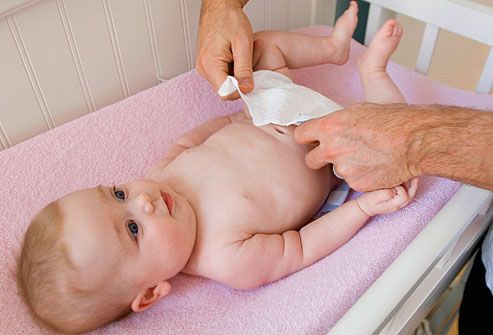
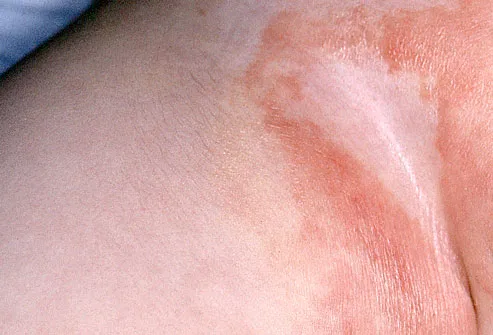
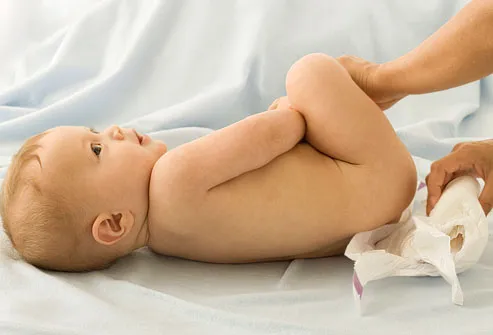
Avoiding Diaper Rash

If baby has red skin around the diaper area, you're dealing with diaper rash. Most diaper rashes occur because of skin irritation due to diapers that are too tight; wet diapers left on for too long; or a particular brand of detergent, diapers, or baby wipes. Avoid it by keeping the diaper area open to the air as long as possible, changing your baby's diaper as soon as it's wet, washing with a warm cloth, and applying zinc oxide cream.


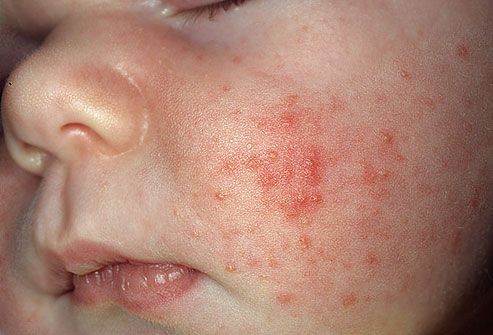
Pimples & Whiteheads

Baby "acne" is not really acne, like the kind teenagers get. In fact, recent research suggests that it may be related to yeast, not oil production. Pimples on baby's nose and cheeks usually clear up by themselves in a few weeks. So you don't need to treat baby acne or use lotion.


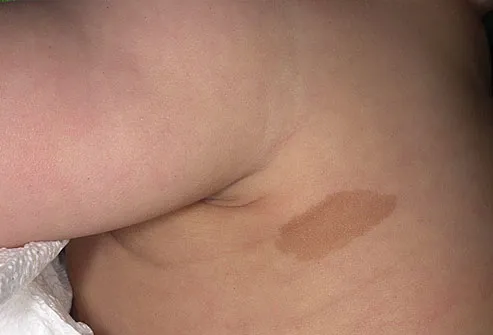
Baby Birthmarks

Lots of babies have birthmarks -- more than one in ten as a matter of fact. Birthmarks, areas of skin discoloration, are not inherited. They may be there when your baby is born, or they might show up a few months later. Generally birthmarks are nothing to worry about and need no treatment. But if your baby's birthmark worries you, talk to your pediatrician.


Atopic Dermatitis or Eczema

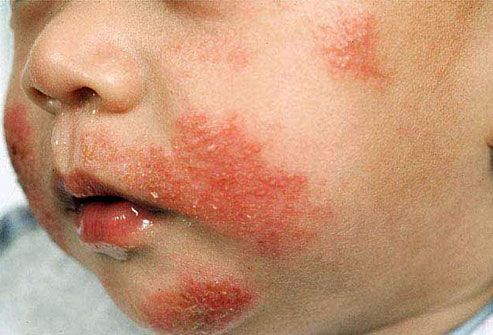
Eczema is an itchy, red rash that may or may not occur in response to a trigger. It is common in children who have a family history of asthma, allergies, or atopic dermatitis. Eczema may occur on baby's face as a weepy rash. Over time it becomes thick, dry, and scaly. You may also see eczema on the elbow, chest, arms, or behind the knees. To treat it, identify and avoid any triggers. Use gentle soaps and detergents and apply moderate amounts of moisturizers. More severe eczema should be treated with prescription medicine.

Baby's Dry Skin

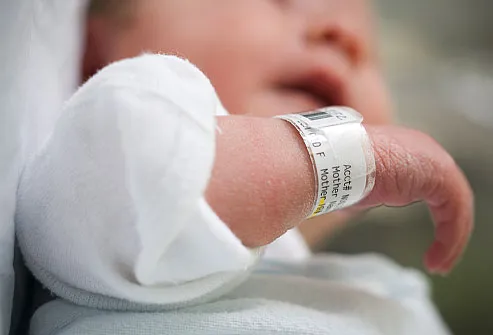
You probably shouldn't worry if your newborn has peeling, dry skin -- it often happens if your baby is born a little late. The underlying skin is perfectly healthy, soft, and moist. If your infant's dry skin persists, talk to your baby's pediatrician.


Excess Oil Causes Cradle Cap

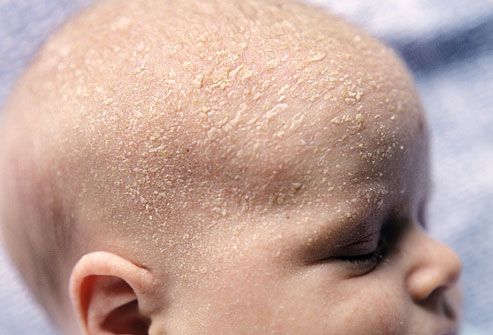
Cradle cap can show up during baby's first or second month, and usually clears up within the first year. Also called seborrheic dermatitis, cradle cap is caused in part by excess oil and shows up as a scaly, waxy, red rash on the scalp, eyebrows, eyelids, the sides of the nose, or behind the ears. Your pediatrician will recommend the best treatment for cradle cap, which may include a special shampoo, baby oil, or certain creams and lotions.


Prickly Heat Causes Irritated Skin

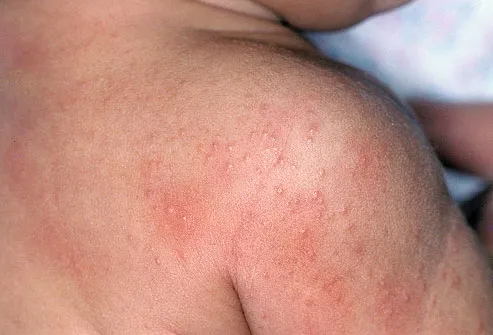
Showing up as small pinkish-red bumps, prickly heat usually appears on the parts of your baby's body that are prone to sweating, like the neck, diaper area, armpits, and skin folds. A cool, dry environment and loose-fitting clothes are all you need to treat prickly heat rash -- which can even be brought on in winter when baby is over-bundled. Try dressing baby in layers that you can remove when things heat up.

Infant Skin Doesn't Need Powdering

Babies can inhale the very fine grains of talcum powder or the larger particles of cornstarch, which could cause lung problems. So it's best to avoid using them on your infant.


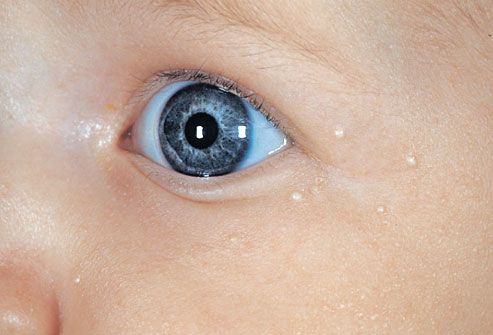
Newborn Skin: White Bumps (Milia)

As many as one in two newborns get the little white bumps known as milia. Appearing usually on the nose and face, they're caused by skin flakes blocking oil glands. Milia are sometimes called "baby acne," but baby acne is related to yeast. In this case, baby skin care is easy: As baby's glands open up over the course of a few days or weeks, the bumps usually disappear, and need no treatment.


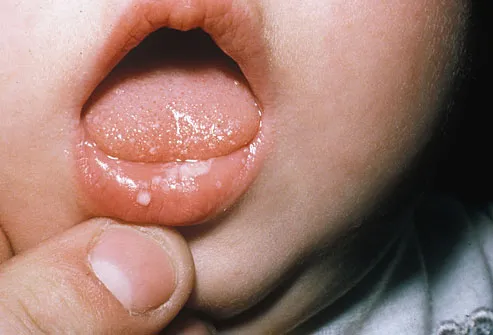
Baby Yeast Infections

Yeast infections often appear after your baby has had a round of antibiotics, and show up differently depending on where they are on your baby's skin. Thrush appears on the tongue and mouth, and looks like dried milk, while a yeast diaper rash is bright red, often with small red pimples at the rash edges. Talk to your pediatrician: Thrush is treated with an anti-yeast liquid medicine, while an anti-fungal cream is used for a yeast diaper rash.


Laundry Tips for Baby Skin Care

Avoiding skin rashes will keep your baby smiling and happy: Use a gentle detergent to wash everything that touches your infant's skin, from bedding and blankets, to towels and even your own clothes. You'll cut down on the likelihood of baby developing irritated or itchy skin.


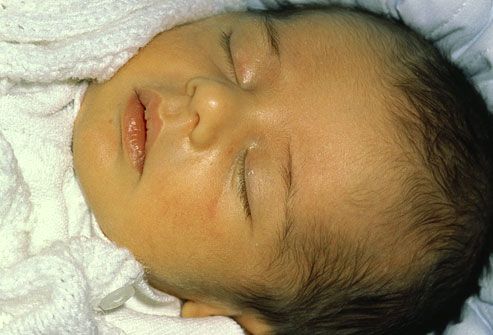
Yellow Skin Can Mean Jaundice

Usually occurring two or three days after birth, jaundice is a yellow coloration that affects baby's skin and eyes. It's common in premature infants. Caused by too much bilirubin (a breakdown product of red blood cells), the condition usually disappears by the time baby is 1 or 2 weeks old. Treatment for jaundice may include more frequent feedings or, for more severe cases, light therapy (phototherapy). If your baby looks yellow, talk to your doctor.

Infant Sunburn

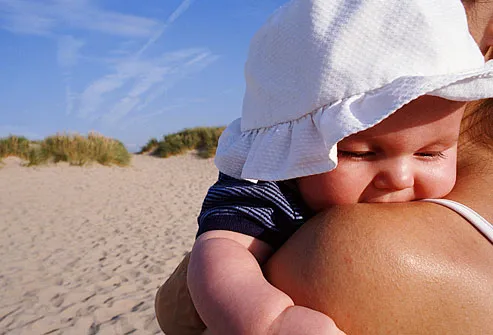
The sun may feel great, but it could be exposing your baby's skin to the risk of damaging sunburn. You can use baby sunscreen on infants at any age. Hats and umbrellas are also good for babies. But for the best protection from sunburn, keep your infant out of direct sunlight during the first six months of life. For mild infant sunburn apply a cool cloth to baby's skin for 10-15 minutes a few times daily. For more severe sunburn, call your child's pediatrician.


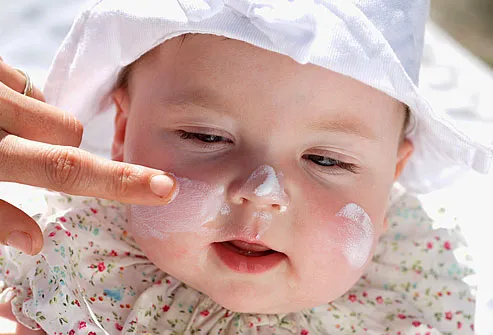
Baby Sunscreen and More

Apply sunscreen to the areas of baby's skin that can't be covered by clothes. You can also use zinc oxide on baby's nose, ears, and lips. Cover the rest of your baby's skin in clothes and a wide-brimmed hat. Sunglasses protect children's eyes from harmful rays.


Baby Skin Care Products

Shopping for baby skin care products? Less is more. Look for items without dyes, fragrance, phthalates and parabens -- all of which could cause skin irritation. When in doubt, talk to your pediatrician to see if a product is appropriate for newborn skin.


Avoiding Skin Problems at Bath Time

Remember, newborn skin is soft and sensitive. Keep baby's skin hydrated by bathing in warm water for only three to five minutes. Avoid letting your baby sit or play or soak for long in soapy water. Apply a baby lotion or moisturizer immediately after bath while skin is still wet, and then pat dry instead of rubbing.


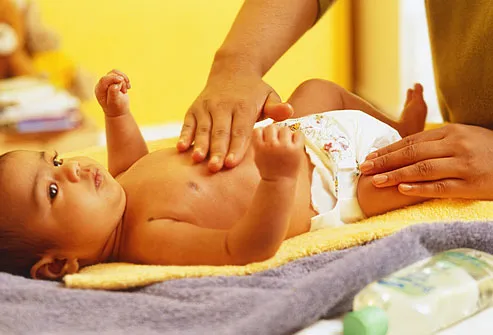
Baby Massage

If rashes or other skin conditions are making your baby irritable, try baby massage. Gently stroking and massaging baby's skin can not only help boost relaxation, but it may also lead to better sleep and reduce or stop crying, according to a recent study.


When to Call the Pediatrician

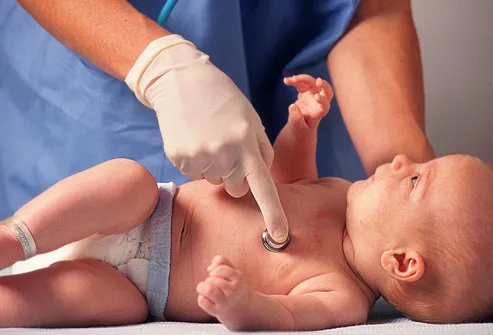
Most baby skin rashes and problems aren't serious, but a few may be signs of infection -- and need close attention. If baby's skin has small, red-purplish dots, if there are yellow fluid-filled bumps (pustules), or if baby has a fever or lethargy, see your pediatrician for medical treatment right away.


Source By:  http://www.webmd.com/parenting/baby/ss/slideshow-baby-skin-care